Be yourself; Everyone else is already taken.
— Oscar Wilde.
This is the first post on my new blog. I’m just getting this new blog going, so stay tuned for more. Subscribe below to get notified when I post new updates.
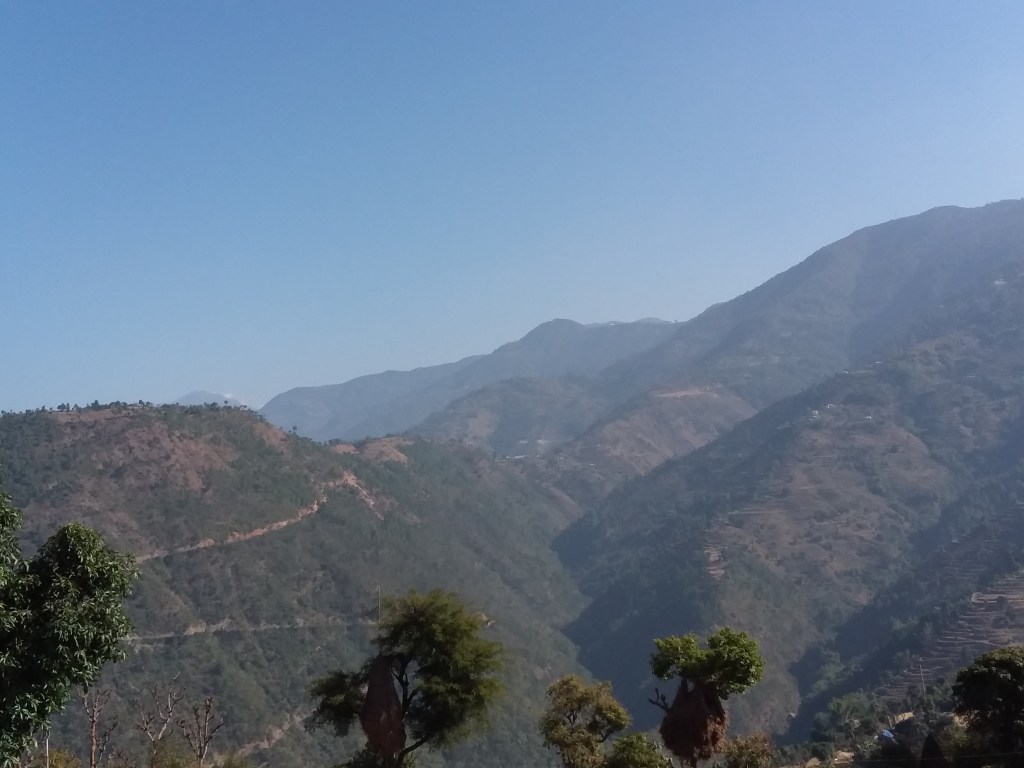
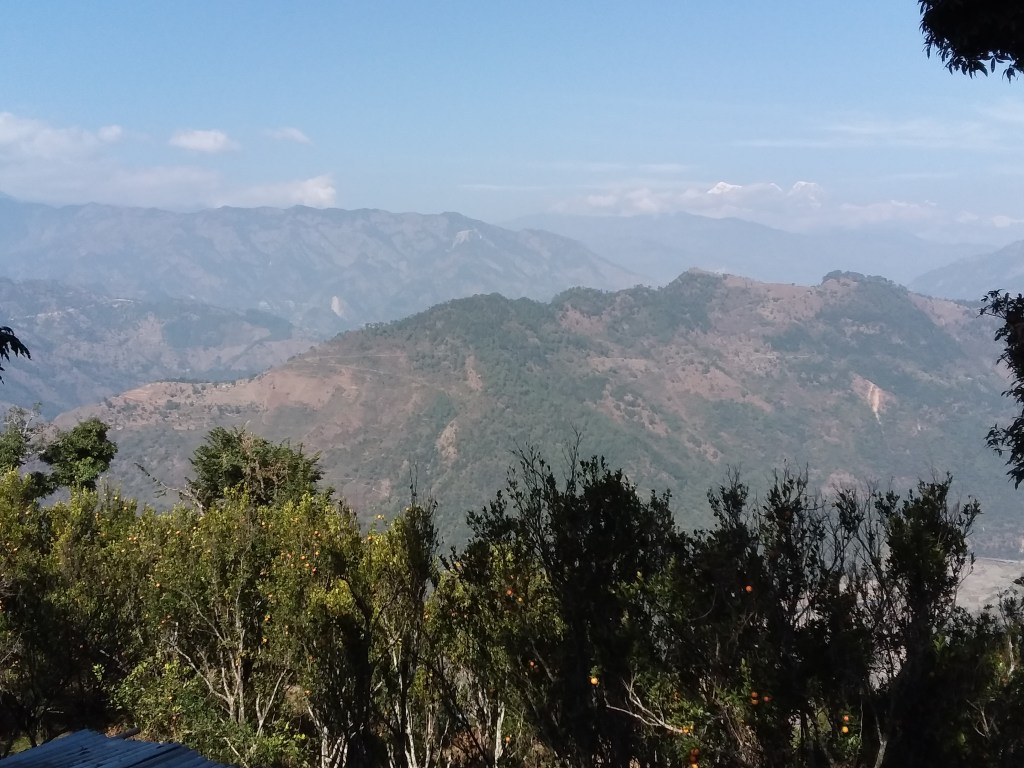
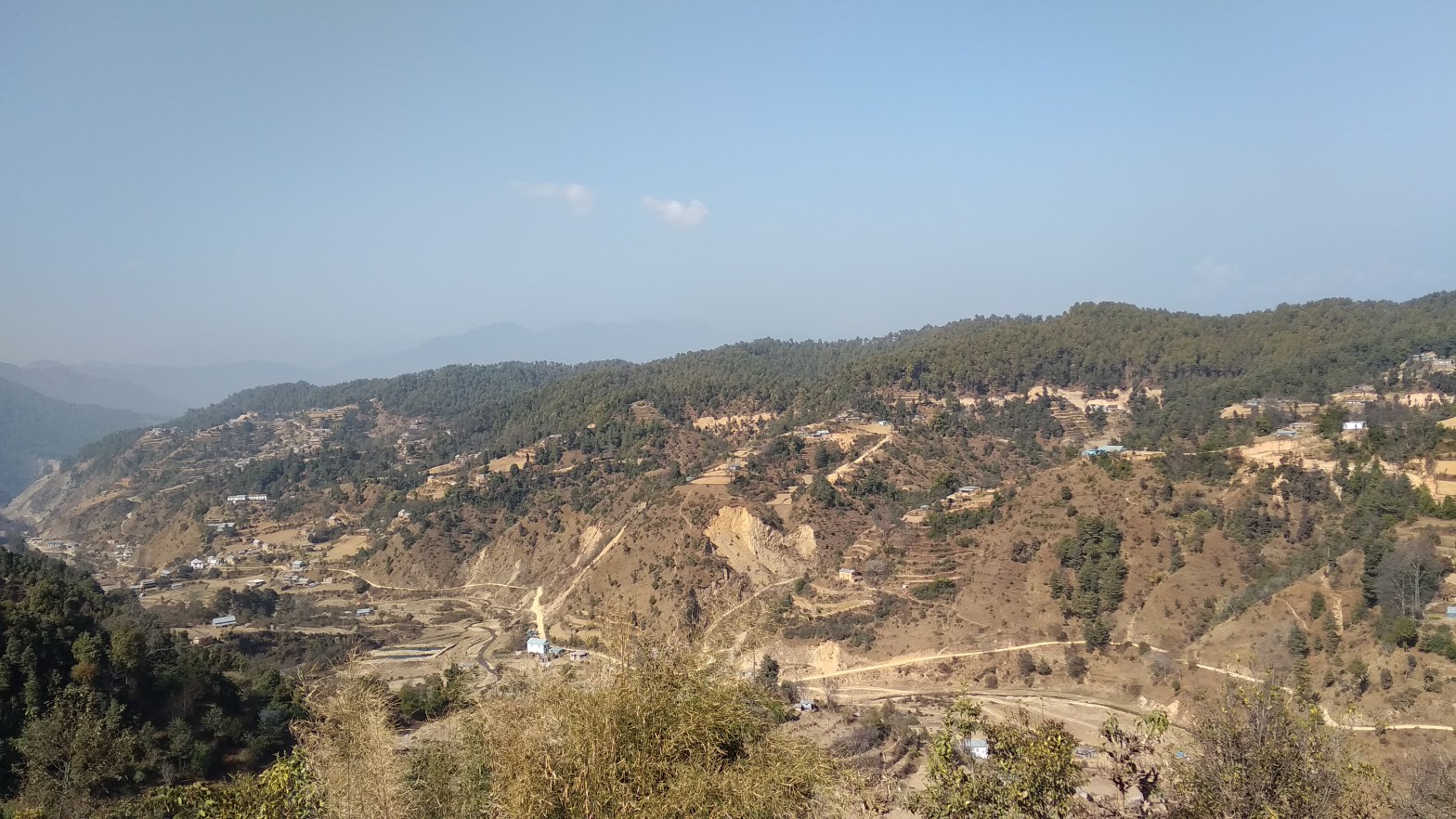
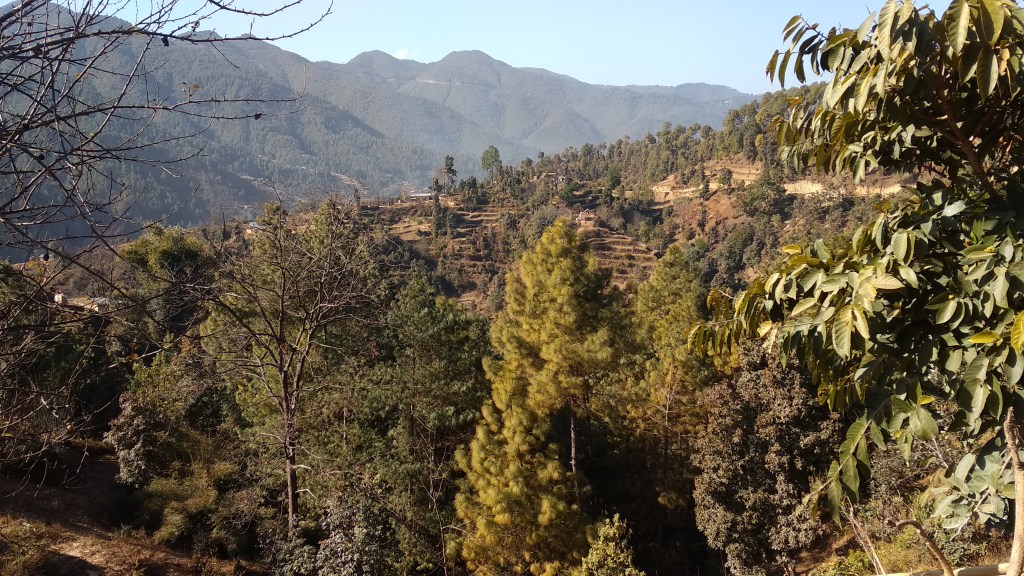
"Snap a sweet photos and live for long as a sweet memory. Showcase your art as its the skill."
Be yourself; Everyone else is already taken.
— Oscar Wilde.
This is the first post on my new blog. I’m just getting this new blog going, so stay tuned for more. Subscribe below to get notified when I post new updates.
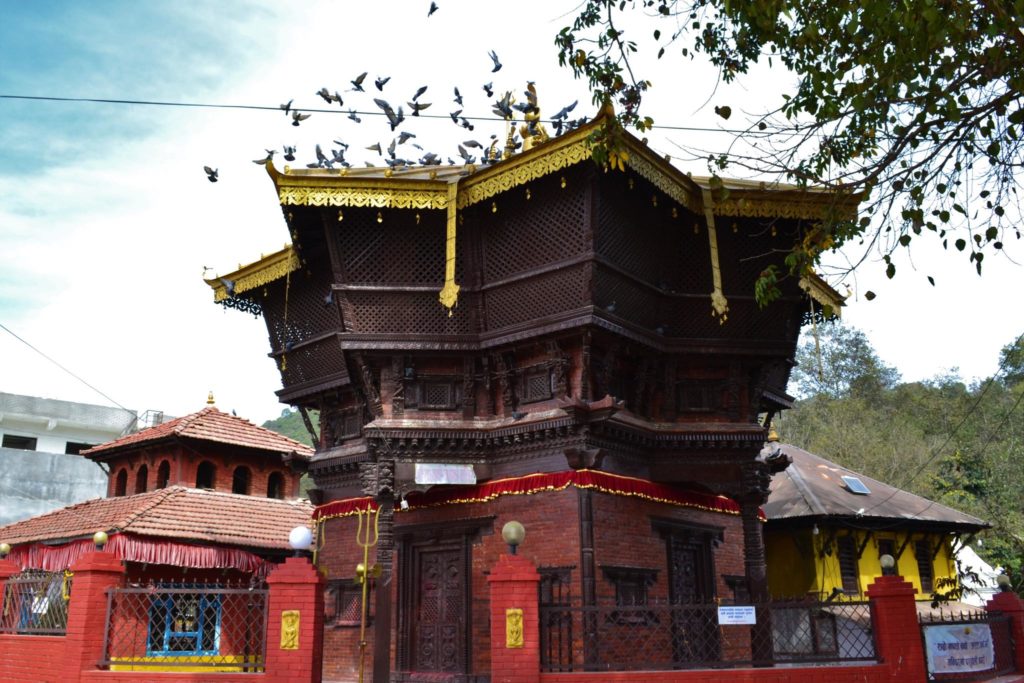
Shree Swasthani is a Hindu goddess (Parameshwari-greatest/superior among all the gods and goddesses ) whose powers and blessings are magnificence. Goddess Swasthani is responsible for all the good fortune of king Navaraj and queen Chandravati of Lawanya Kingdom – one of the kingdom before unification of Nepal.
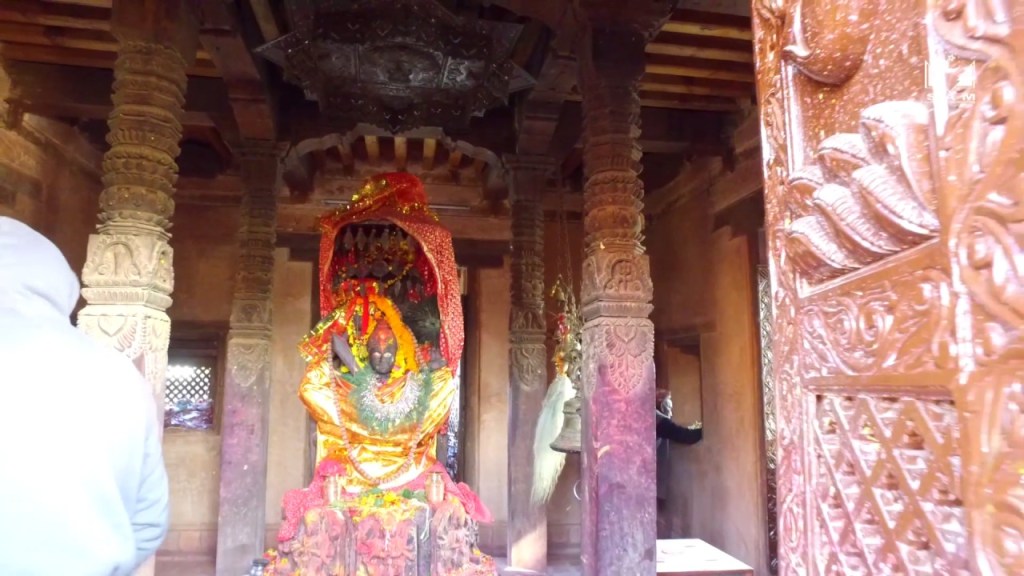
The original Newa version of Swasthani is very different than written in Nepali language. People in the town of Sakhu have handwritten documents of Swasthani in Newar language.
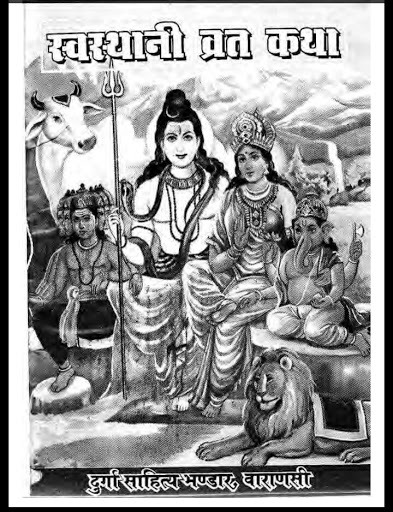
Swasthani Brata Katha is a Hindu tale recited everyday for a month, which mostly falls in the month of January and February. The book has 31 chapters which says the story of life of various gods and goddesses including the creation of living beings. However, the story of goddess Swasthani and Shiva is mainly focused, Swasthani is the Hindu deity known for miraculously granting wishes made in a solemn state by the pure. The sacred book was originated in Ancient civilizations of Nepal. The Brahmins were the first to have read this. Mostly Nepali Hindus read this sacred book in comparison with those from India. This book’s story was derived from Skanda Purana.
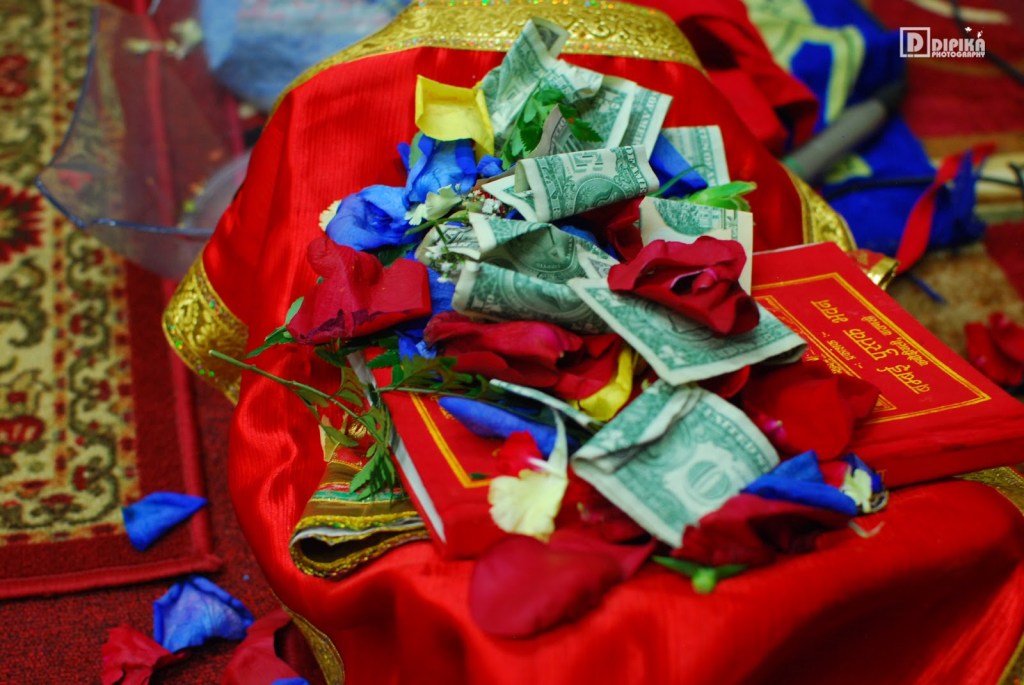
The festival usually begins from the full moon day in the Pohela month of Nepal Era which is Poush month of Bikram Sambat, normally from January to February, and will end on the next full moon day. Every night family members gather around, recite one chapter of the story each day till the 31st day in almost every Nepali family. This month-long festival is marked by fasting especially by women including few men the entire month for the sake of family welfare or getting a good husband or wife. The festival conclude with an Ashwamegha Yagya, devotees worship god Shiva for whole night.
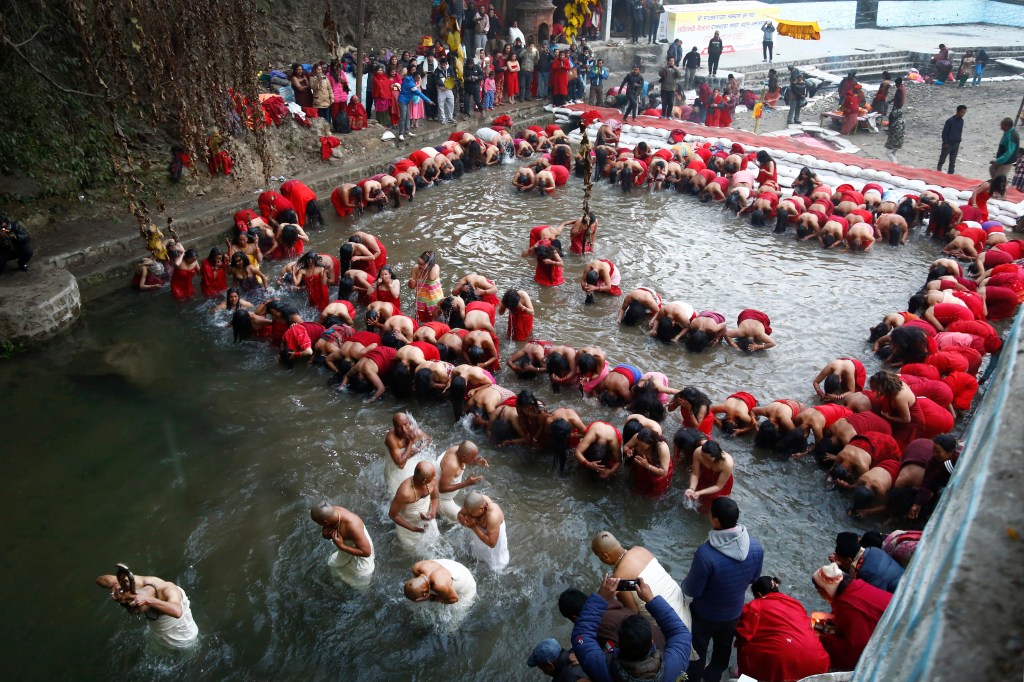
When the festival concludes next month, various types of food are prepared to mark the end of the day and it is believed that every thing has to be 108 pieces even the flowers. Of the 108 pieces, eight are to be given to the husbands, if there is no husband then to son, and if no son then to the son of a friend, and if no friend then the fasting lady has to formally release it on the nearby river.
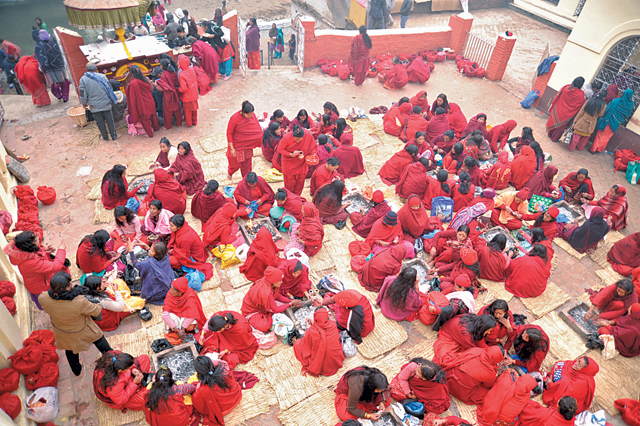
The festival is in fact not a festival. It is a ritual of fasting for 30 days. It is called ‘apsan chonegu’ in the local Newa language and ‘brata’ in Nepali. Fasting is voluntary for those interested undertake this month-long brata. Traditionally, the locals of Swaniga – Kathmandu Valley – observed this brata. Swaniga refers to the local villages, towns and cities like Sakwo(Sankhu), Khwopa (Bhaktapur), Yala, (Patan),Yen (Kathmandu), Bhondesh -Bhotan (Banepa), Palanti (Panauti), Phampi (Pharpin), and other Newar localities. Especially people from certain castes of Newars took this brata. In the present day context, the devotees are not limited to Newar community only.
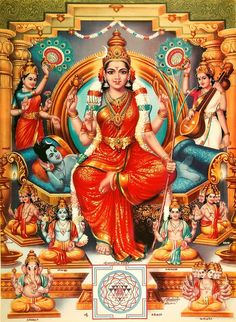
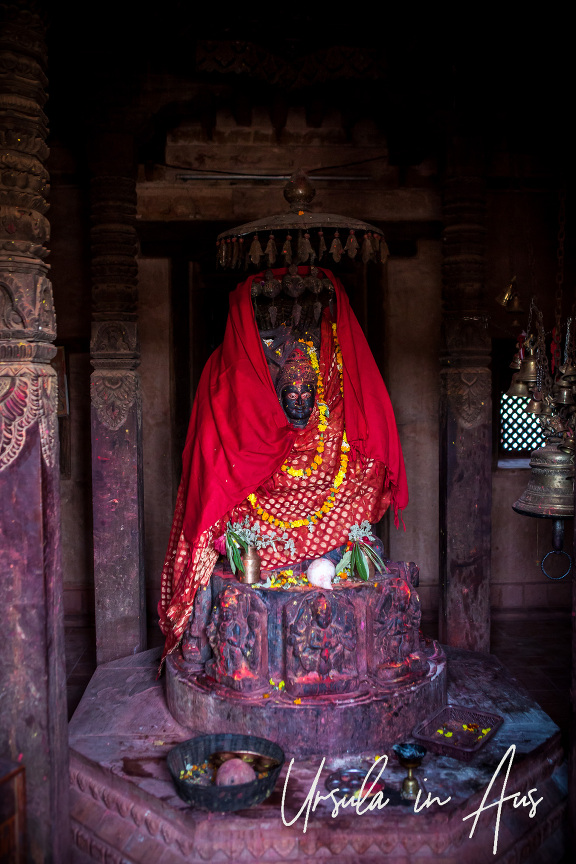
There are devotees from all over the country and all the Hindu castes. The devotees from Brahmin and Chhetri communities are increasing year by year. During the Brata, God Madhavnarayan is worshipped. It seems that the brata is a blend of Shaiva and Vaishnav culture. Madhavnarayan is the name of the lord Vishnu in the month Magh since the lord Vishnu is worshipped by different names in each of the 12 different months.
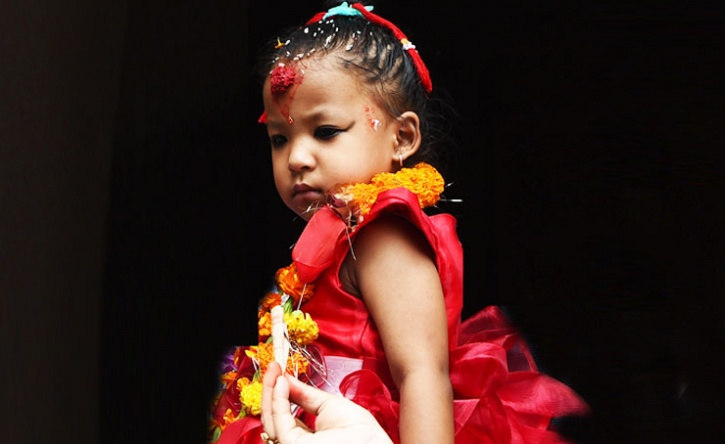
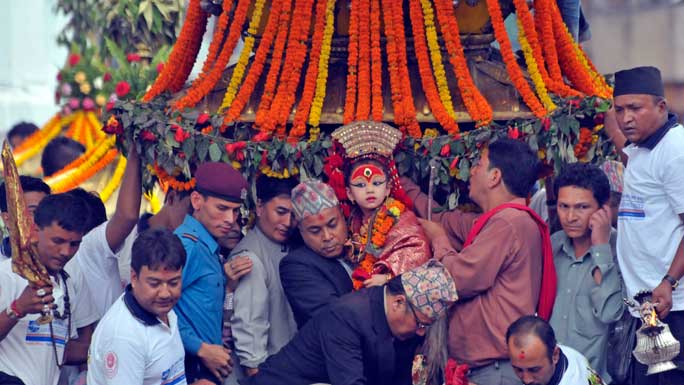
The Kumari Goddess is the only living goddess worshipped by Hindus and Buddhists. The literal meaning of Kumari is Virgin. Kumari Goddess is the living incarnation of Goddess Taleju. Kumari is the human incarnation of Goddess Taleju and symbolizes power and protection.
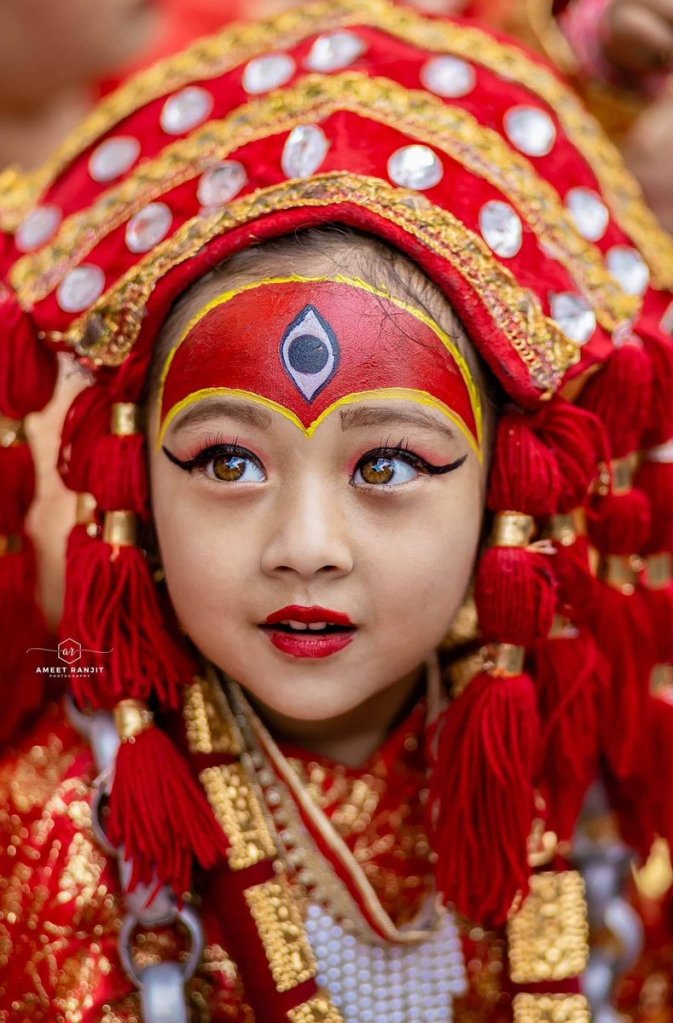
The word “kumari” is derived from the Sanskrit word “kaumarya” which means princess. In Nepal, a kumari is a prepubescent girl choosed from the Shakya or Bajracharya clan of the Nepalese Newar community who receive the power of Goddess Kali and Taleju.
Several tales regarding the history and origin of Goddess Kumari are prevailed in the society. Amongst few, two similar tales concerning the Goddess Taleju and King are widespread and believed by many communities.
The first tale is of Jaya Prakash Malla, the last king of the Malla Dynasty. According to the legend, Goddess Taleju visited Jaya Prakash Malla’s chambers during night time as a beautiful woman. They would play Tripasa (a dice game). The goddess visited the king’s chamber every night on the condition that the king refrains speaking about their meetings to anyone.
One fateful evening, the king’s wife followed him to his chambers and inspected on his secret meetings with the goddess Taleju. The goddess became aware of the king’s wife and left furiously. Goddess Taleju told Jaya Prakash in his dream that she would reincarnate as a living goddess in children among the Shakya and Bajracharya community of Ratnawali. In his attempt to make amends with Goddess Taleju, Jaya Prakash Malla searched for children possessed by Taleju’s spirit and hence started the Kumari Goddess tradition. Jaya Prakash also established a house for Kumari to stay near the palace and named it “Kumari Ghar.”
A second myth about the origin of Kumari Goddess circles around King Trailokya. According to myth, Goddess Taleju and King Trailokya played Tripasa every night and discussed the welfare of the country. One night, Trailokya made sexual advances towards the Goddess and infuriated her. As punishment, Goddess stopped visiting the King’s place. Trailokya worshipped and pleaded for her return. Later, Goddess Taleju agreed to appear in the body of a virgin girl from the Shakya family. Hence, the Kumari Goddess cult was established.
The process to find a living goddess is quite vast and has many criteria. Five senior Buddhist Bajracharya, Chief Royal Priest, Priest of Taleju and royal astrologer oversees the selection ritual of Kumari. Some basic characteristics searched in children are sound health, no evidence of scars and marks on the body, uncut and blemish body skin, pre-menstrual and no loss of teeth.
Once a girl passes through the basic requirements of Kumari Goddess, she is then further examined for “Battis Lakshan” 32-body perfections to decide the future Kumari. Some of the characteristics of Battis Lakshan are:
The children also must not be scared of blood and masked man. Every child is shown several sacrificed buffalo and masked men dancing on top of the blood. If a child shows signs of fear, she is deemed not worthy of Goddess Taleju’s power. The girl that shows courage amidst the blood and dancing is then selected as the next incarnation of Goddess Taleju.
During the 8th day of Dashain, Kala-Ratri, the selection process of Kumari Goddess begins.
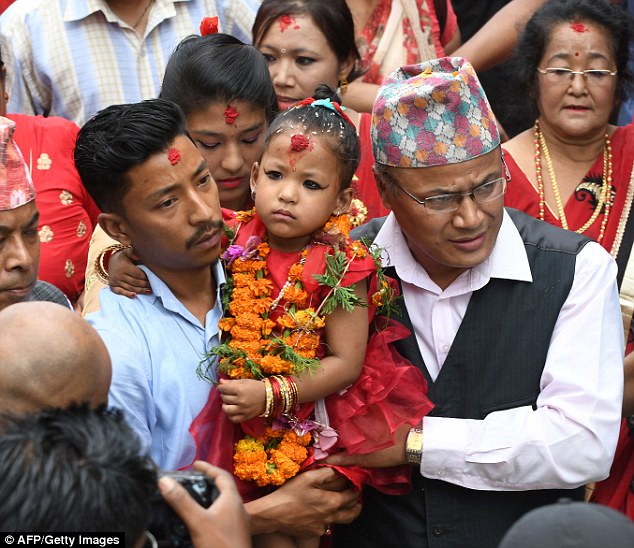
Kumari Goddess, the human symbol of power and protection is the sole embodiment of pureness among Hindu and Buddhist followers. A Kumari must be in her pre-pubescent and should not have lost any drop of blood from her body. After the Kumari enters her adolescence and begins her first menstruation, she is considered impure, and the search of new Kumari begins.
In some cases, the title of Kumari is lost when the reigning Kumari suffers a cut and loses blood from her body. If a Kumari loses blood from her body, she becomes like any other humans and loses the power of Gods bestowed on her.
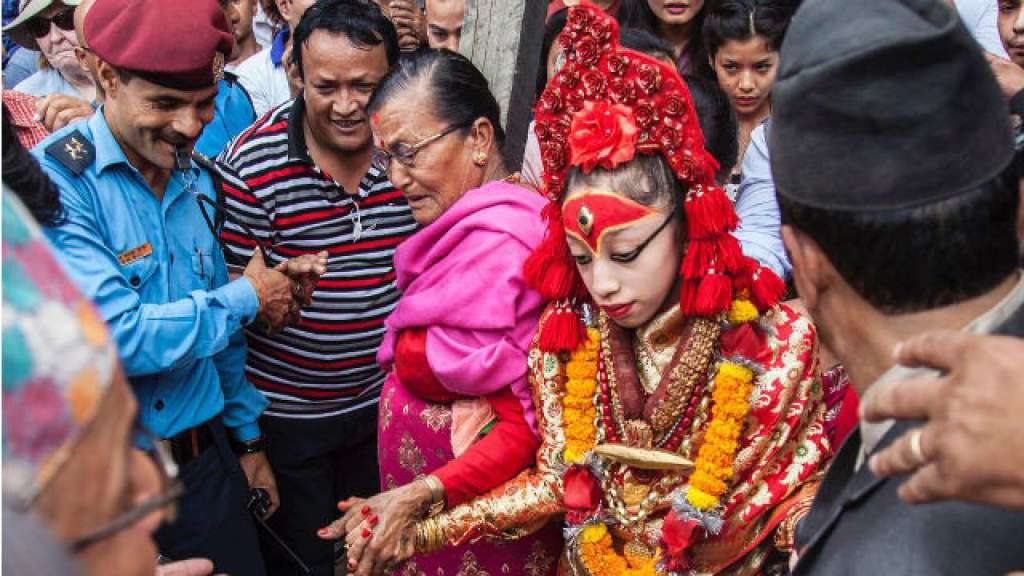
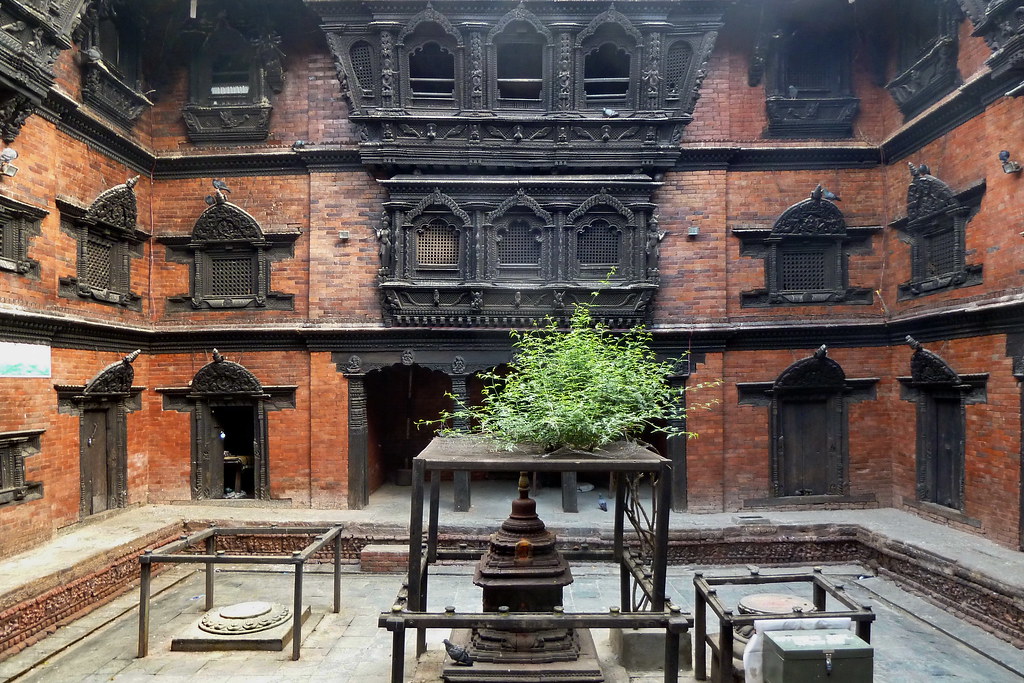
Every people dream to be among the Gods once in their life. However, it is not so easy to sustain the life of a living goddess. Kumari Goddess is selected at very young age from as small to three years. After being selected as Kumari, the children leave their parents and birth house until another living goddess replaces her.
The parents are proud of giving birth to Goddess Taleju, but also remain sad parting away with their daughter. The parents aren’t allowed to visit their daughter and only see their children when Kumari ventures in special facilities, about 13 times a year. Kumari lives in the Kumari house (Kumari Ghar).
There are many Kumari Goddesses in Nepal indigenous to several locations and communities. Patan, Bhaktapur, Kathmandu, Bungamati and other Newar communities have their own Kumaris. The Kumari of Kathmandu is considered as the Royal Kumari, the supreme of all.
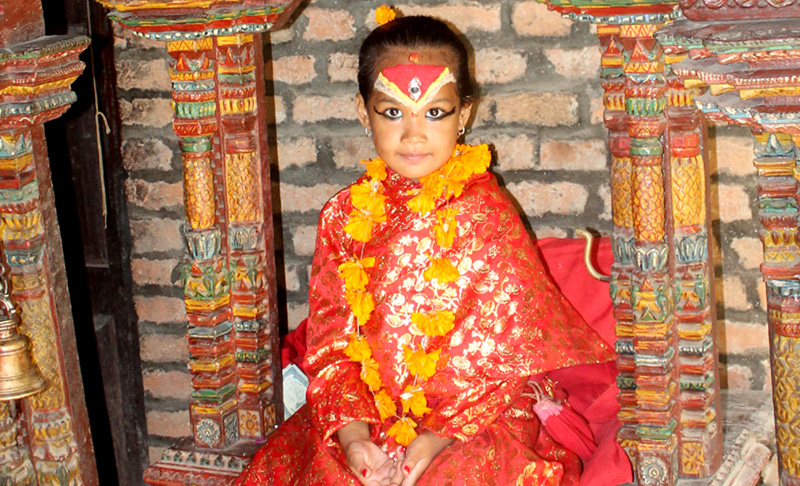
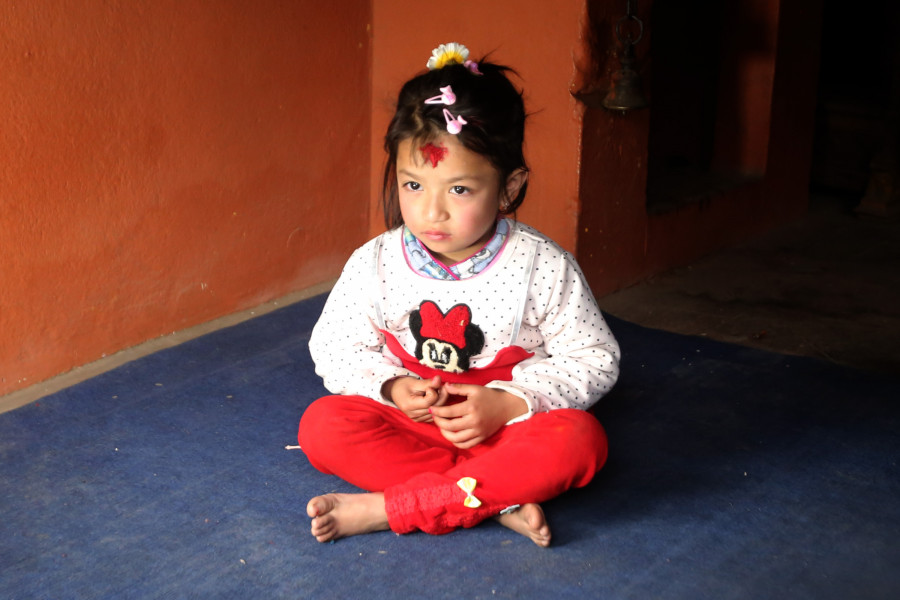
A recent discussion and pressure from Human rights and Children rights activists of Nepal on the Kumari system have somewhat changed the strict governing of Kumaris of Kathmandu. Kumaris weren’t given proper education and knowledge about social life and surrounding. This made the transition from a living goddess to mere mortal after dethroning much more troublesome.
Nowadays, Kumari in the Kumari house is provided with a personal tutor and education. There is even service of the Internet, books, and magazines. The Kumari attends national exams inside the palace under supervision. There is a step towards a better future of Goddess Kumari after they lose the title of living goddess.
After being selected as a Kumari, a girl life changes entirely. She will leave her palace only for ceremonial purpose, her family will rarely visit on a formal capacity and her playmates will be from the caretaker’s family. The Kumari always wear red clothes, hair in a topknot and the fire eye painted on her forehead.
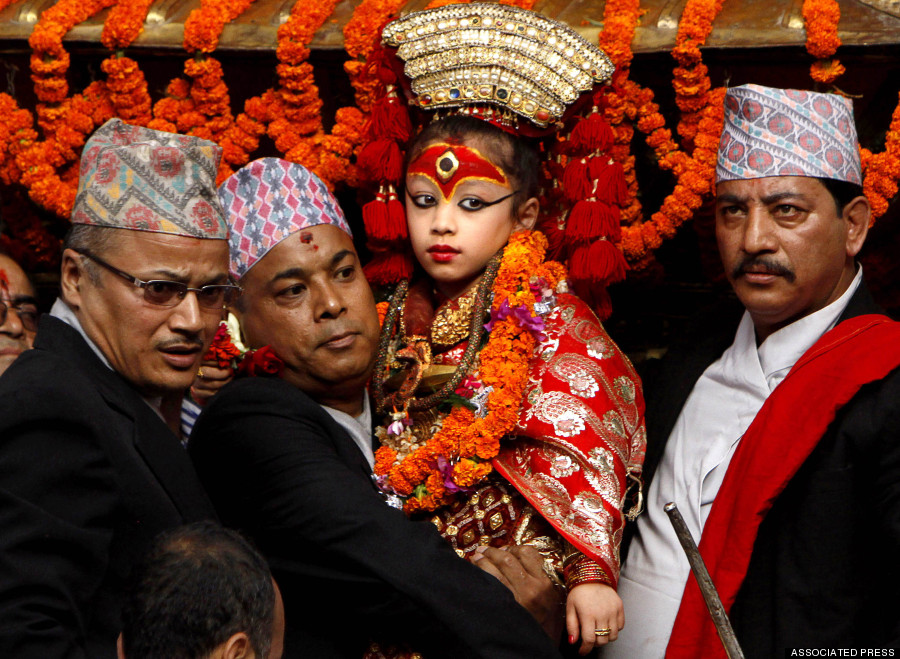
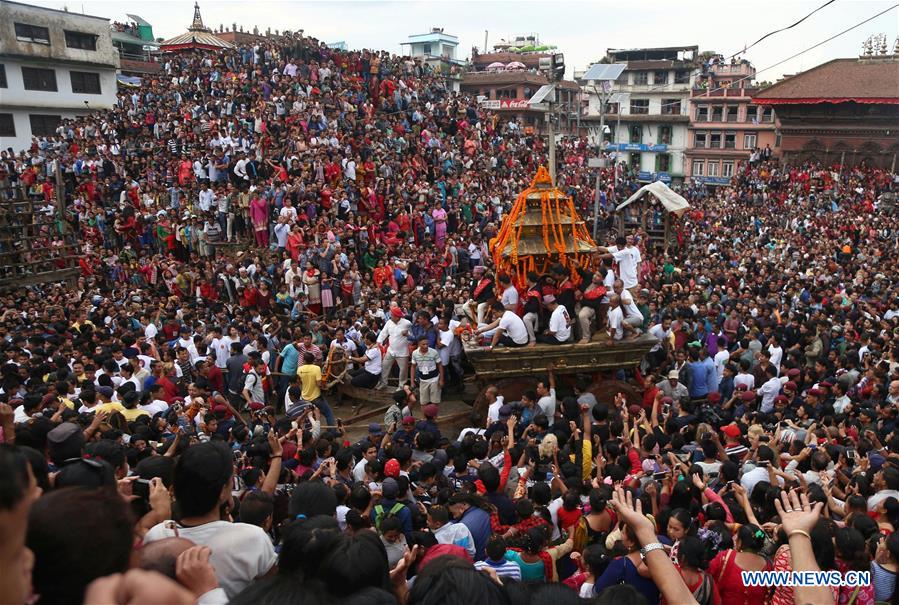
The Kumari’s walk in the Durbar Square is the last time her feet will touch the ground until the Goddess Taleju departs from her body. The Prime Minister and President touch the feet of Kumari and seek for a blessing. The Kumari is carried when visiting outside the palace in her golden palanquin.
A Kumari’s glimpse is believed to bring good fortune. Many people visit the courtyard in front of Kumari’s window to get a glance of the living goddess. The more fortunate and better-connected people visit the Kumari in her chambers. She sits upon a gilded iron throne. Many people who visit her are those suffering from illness and menstrual disorders. It is believed that Kumari has special powers over such illness. Bureaucrats and high ranked government officials also visit Kumari Goddess. During the visit, the actions of the living goddess are closely watched because her actions are interpreted as a prediction of the visitor’s life. Some actions and its meaning of Kumari Goddess are:
Maghe Sankranti is a hidus festival observed on the first day of Magh (around mid-January). It is celebrated as the starting of the auspicious month of Magh by Nepali people. Through some sources, it’s found that hindu observe this festival as Makar festival where most people take fast and worship lord “Makar”-God Ayopa.
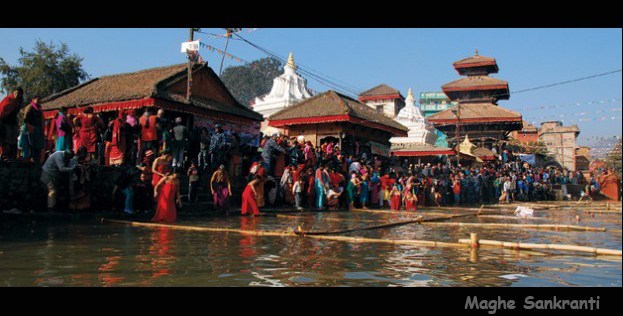
In comparison to the cold month of Poush, this festive month brings a harbinger of longer and relatively warmer days. Further, the sun is supposed to start moving towards the Northern Hemisphere on this day. In that sense, Maghe Sankranti is similar to solstice festivals in various religious traditions.
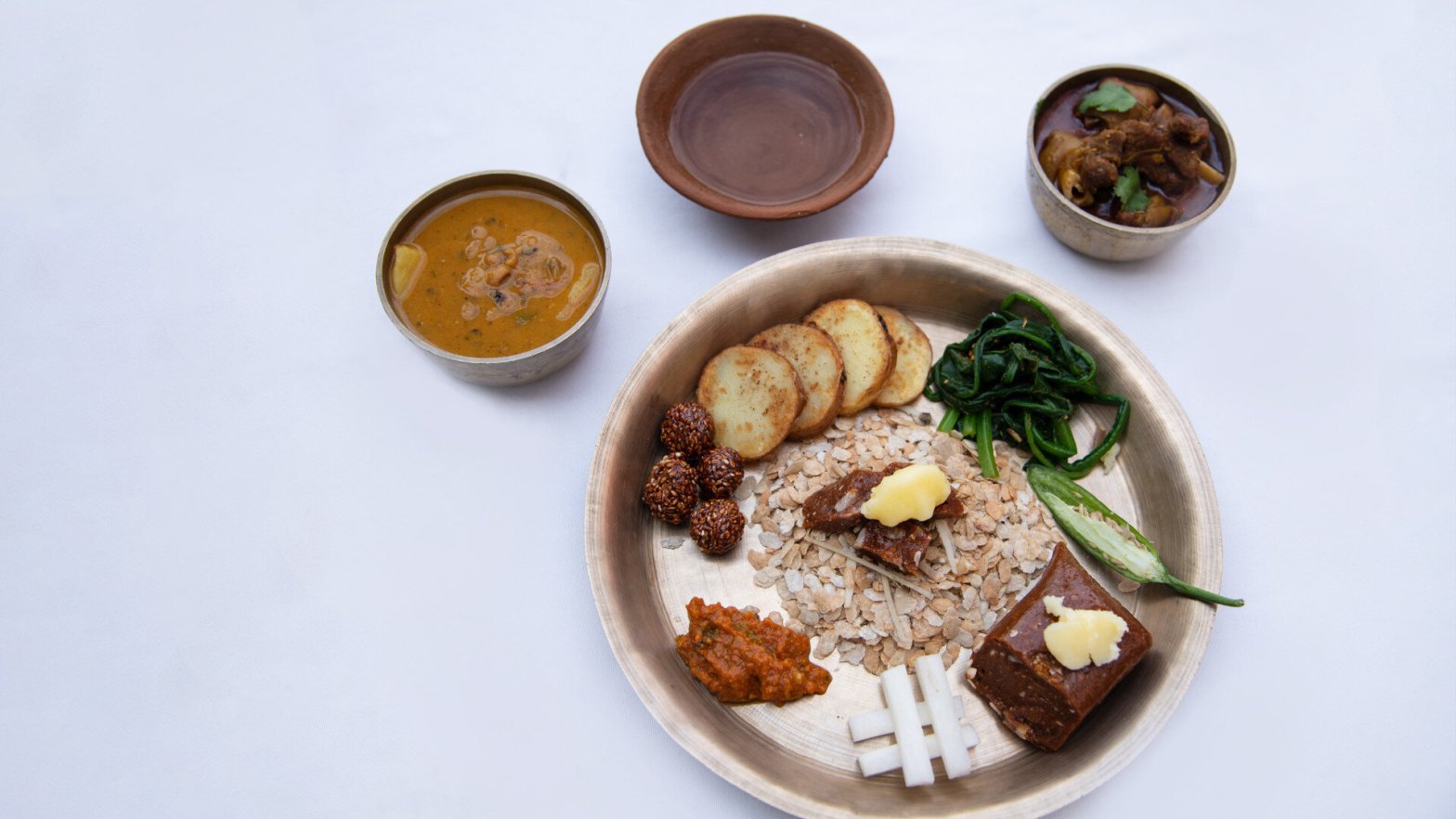
Hindus observe this festival taking ritual dip in holy river confluences, most notably in Devghat, Chitwan. During the day, Families get together and eat meals together as Sesame seed laddus, ghee, molasses, sweet potatoes, and yam. People worship Lord Vishnu during the month by reading the sacred Bhagwad Gita, also known as The Song of the Gods and offering pujas.
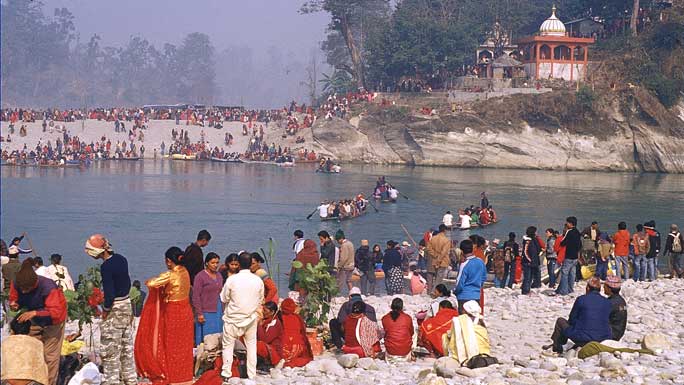
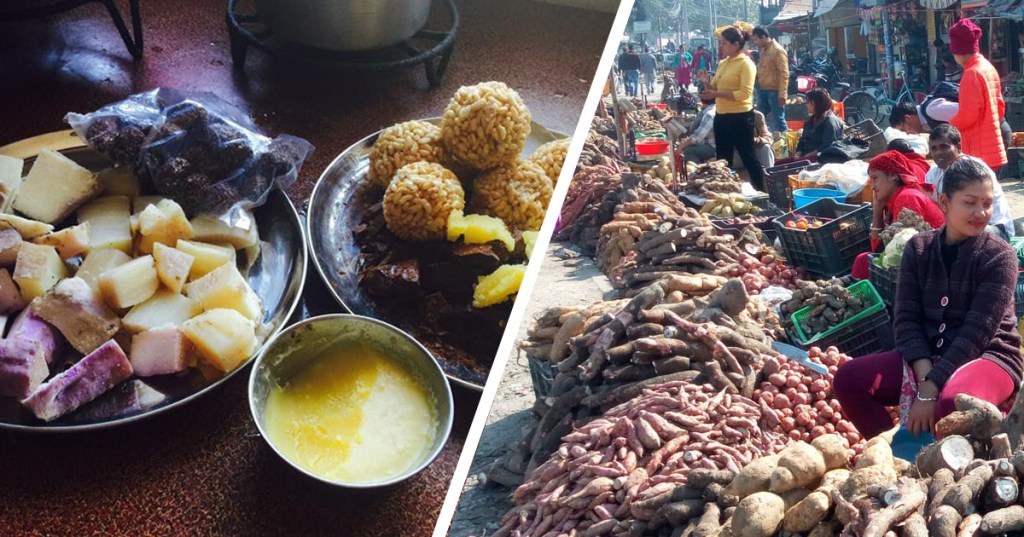
The Tharu community also celebrate the first day of Magh as Maghi or New Year in the Terai. It is a week-long festival celebrated by getting together as a family and friends, dressing up in the traditional Tharu wear, attending community get together or mela, eating, drinking, and making merry.
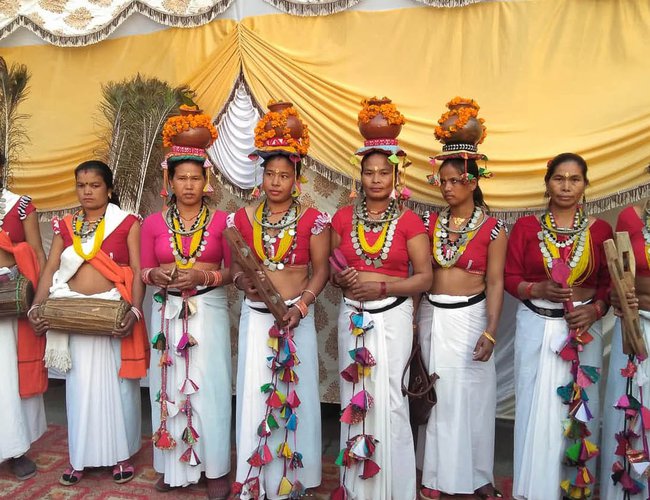
Additionally, hindu people receives oils in their head, ears and body from the seniors after having a bath and take a Sun-bask. It’s believed to clear all the impurities within and develop the positive power of trust, hearing, bearing and thinking.
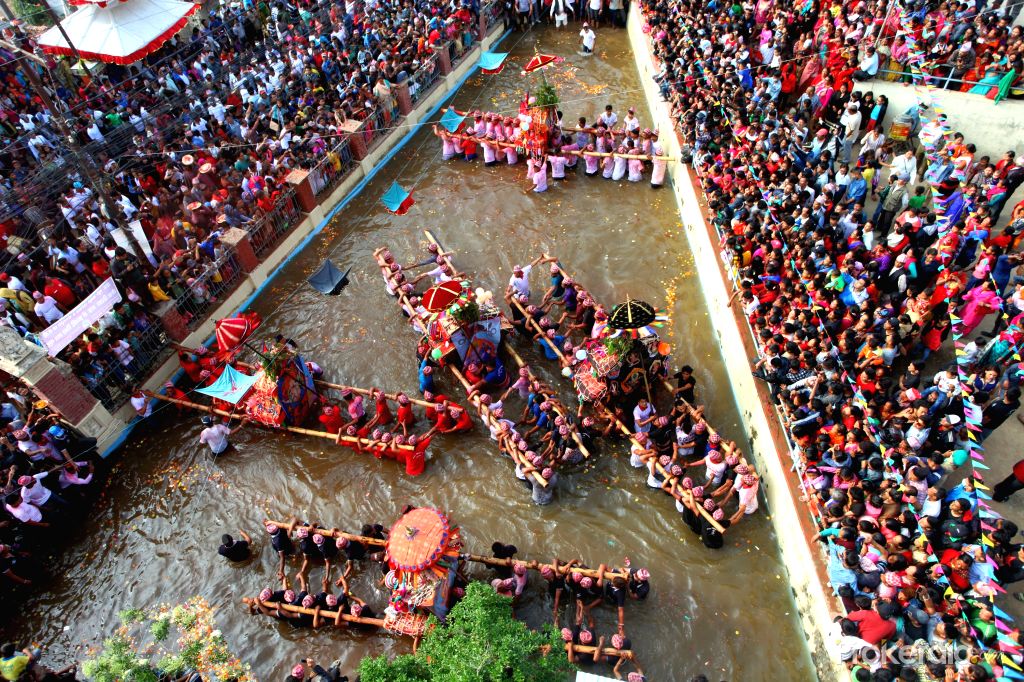
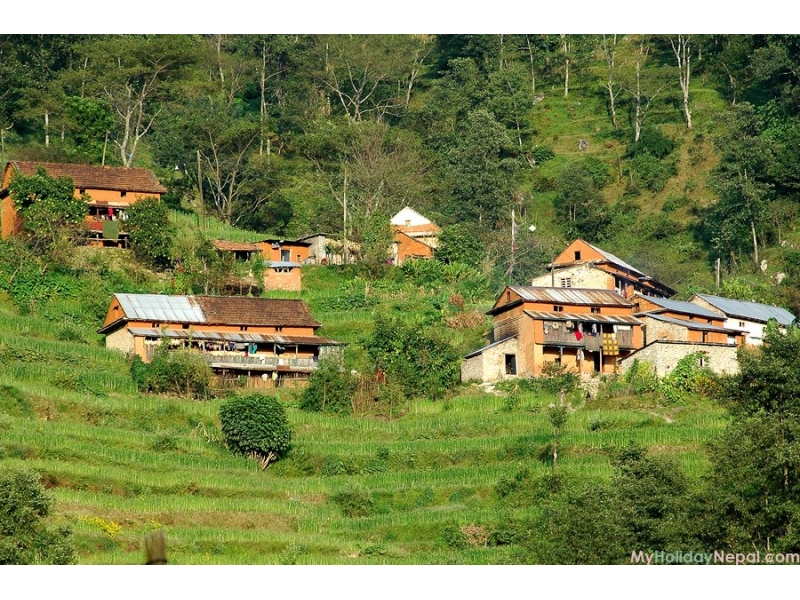
Tokha (Nepali: टोखा) is a municipality located in Kathmandu District, Province No. 3 of Nepal. From different sources it’s found that tokha was established on 2nd December 2014 merging the former Village development committees Jhor , Dhapasi, Mahankal, Tokha Chandeshwari, Gongabu, and Tokha Saraswati. It’s supposed that the name of Municiaplity “Tokha” is derived from the historical town of Tokha (currently ward 2 and 3).
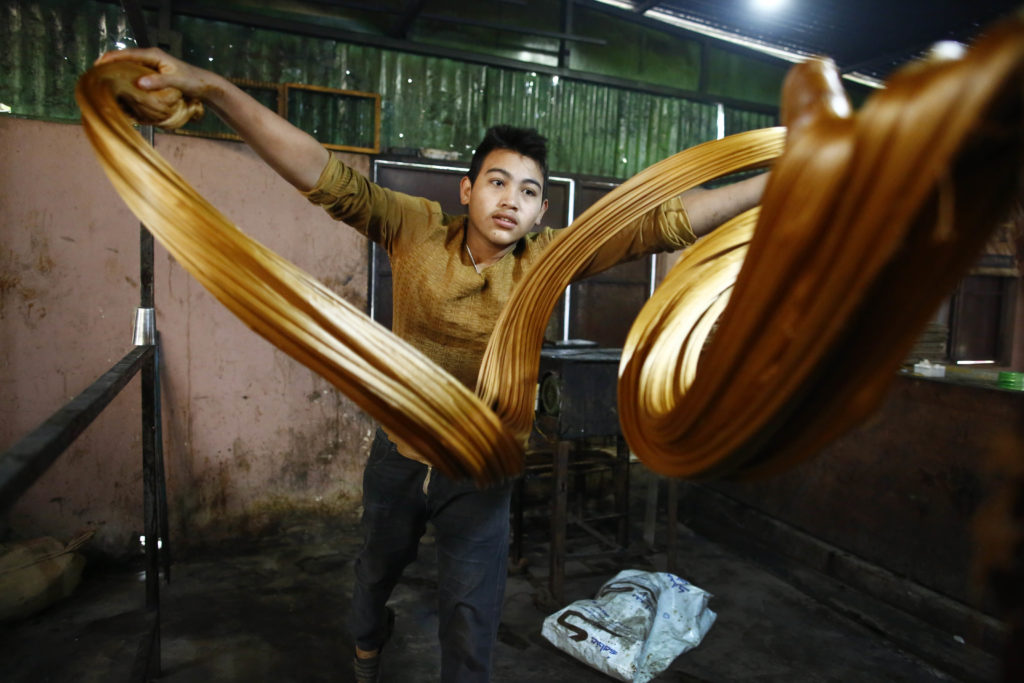
Tokha is derived from two Newari words i.e., Tu, means ‘sugarcane’ and Khya means ‘field’. Tokha is recognized for its production of chaku, a delicacy made from raw sugarcane juice.
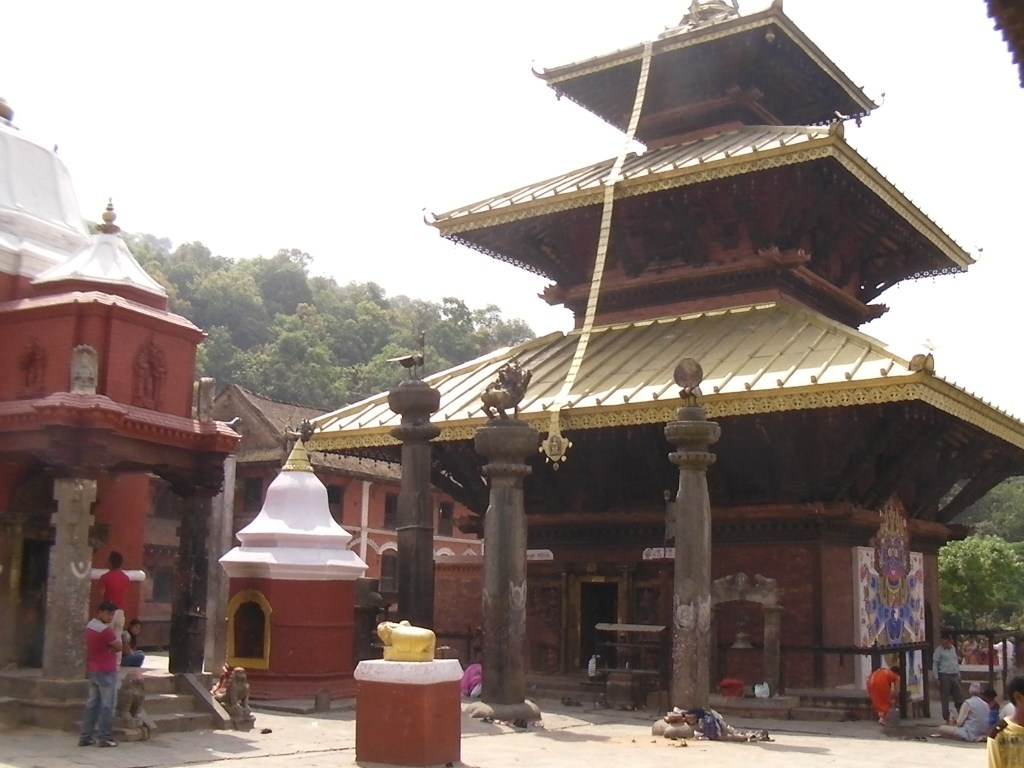
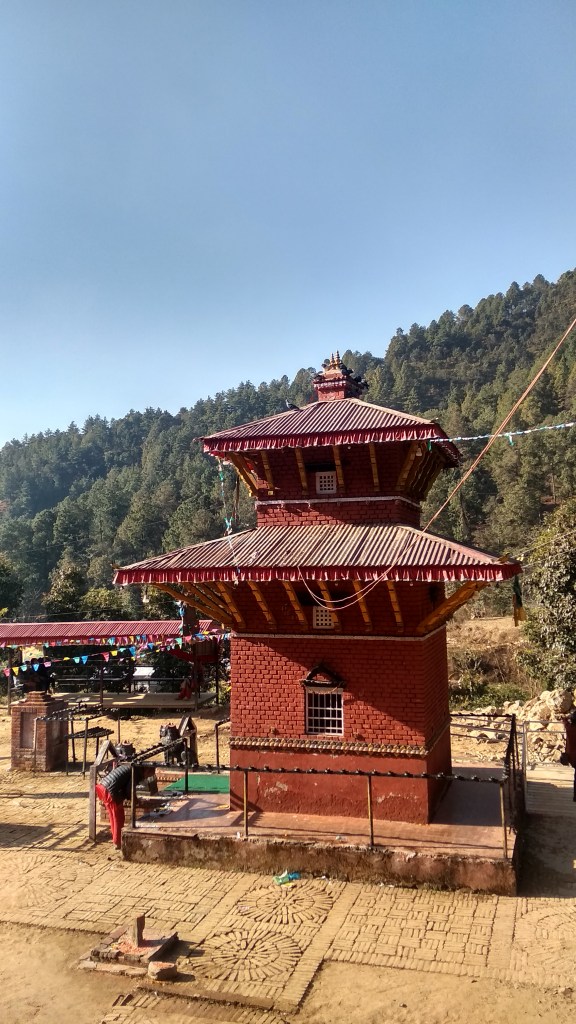
Tokha is popular for its culture and religious-historic places as Chandeswori temple located in chandeshowri VDC, Tokha. Mostly, Newars are found in Tokha living together acknowledging their rituals, perspectives, and cultures.
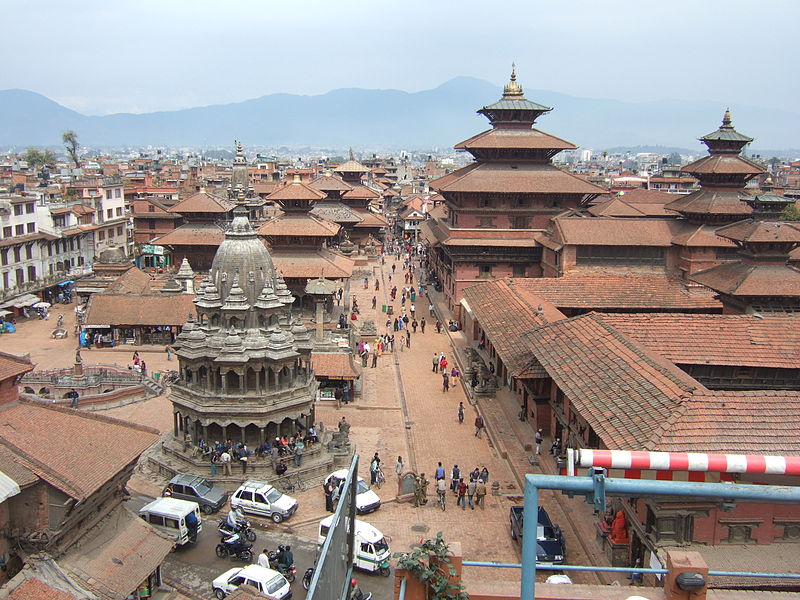
Lalitpur Metropolitan City (Nepali: ललितपुर महानगरपालिका)
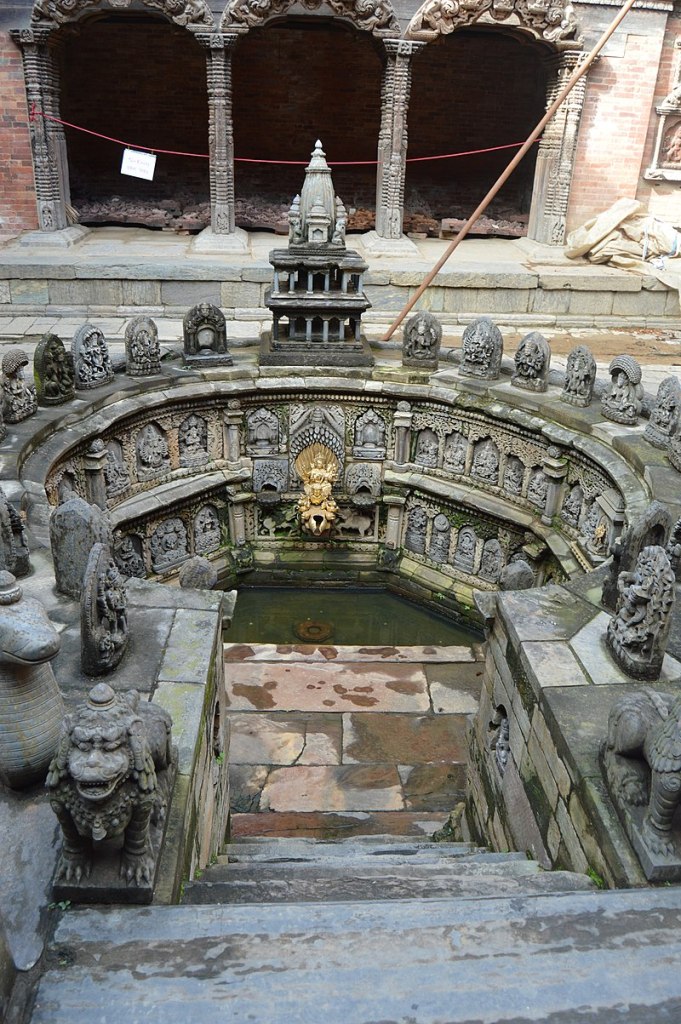
historically Patan (Sanskrit: पाटन Pātan, Nepal Bhasa: यल Yala, Nepali: पाटन [paʈɑn]), is the third largest city of Nepal after Kathmandu and Pokhara and it is located in the south-central part of Kathmandu valley which is a new metropolitan city of Nepal. Lalitpur is also known as Manigal. It is best known for its rich cultural heriatage, particularly its tradition of arts and crafts. It is called city of festival and feast, fine ancient art, making of metallic and stone carving statue.

This is an example post, originally published as part of Blogging University. Enroll in one of our ten programs, and start your blog right.
You’re going to publish a post today. Don’t worry about how your blog looks. Don’t worry if you haven’t given it a name yet, or you’re feeling overwhelmed. Just click the “New Post” button, and tell us why you’re here.
Why do this?
The post can be short or long, a personal intro to your life or a bloggy mission statement, a manifesto for the future or a simple outline of your the types of things you hope to publish.
To help you get started, here are a few questions:
You’re not locked into any of this; one of the wonderful things about blogs is how they constantly evolve as we learn, grow, and interact with one another — but it’s good to know where and why you started, and articulating your goals may just give you a few other post ideas.
Can’t think how to get started? Just write the first thing that pops into your head. Anne Lamott, author of a book on writing we love, says that you need to give yourself permission to write a “crappy first draft”. Anne makes a great point — just start writing, and worry about editing it later.
When you’re ready to publish, give your post three to five tags that describe your blog’s focus — writing, photography, fiction, parenting, food, cars, movies, sports, whatever. These tags will help others who care about your topics find you in the Reader. Make sure one of the tags is “zerotohero,” so other new bloggers can find you, too.

 Aashish's Photography blog