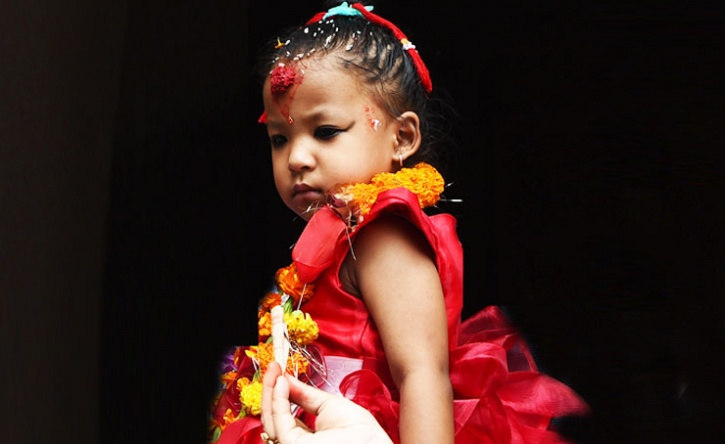
The Kumari Goddess is the only living goddess worshipped by Hindus and Buddhists. The literal meaning of Kumari is Virgin. Kumari Goddess is the living incarnation of Goddess Taleju. Kumari is the human incarnation of Goddess Taleju and symbolizes power and protection.
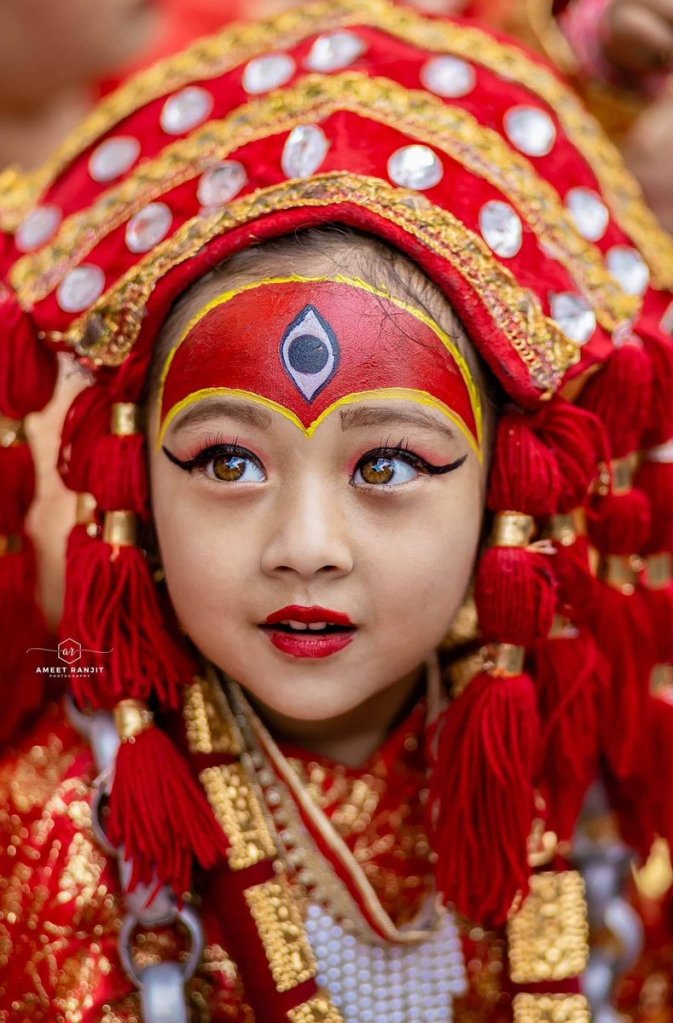
The word “kumari” is derived from the Sanskrit word “kaumarya” which means princess. In Nepal, a kumari is a prepubescent girl choosed from the Shakya or Bajracharya clan of the Nepalese Newar community who receive the power of Goddess Kali and Taleju.
HISTORY OF LIVING GODDESS KUMARI
Several tales regarding the history and origin of Goddess Kumari are prevailed in the society. Amongst few, two similar tales concerning the Goddess Taleju and King are widespread and believed by many communities.
The first tale is of Jaya Prakash Malla, the last king of the Malla Dynasty. According to the legend, Goddess Taleju visited Jaya Prakash Malla’s chambers during night time as a beautiful woman. They would play Tripasa (a dice game). The goddess visited the king’s chamber every night on the condition that the king refrains speaking about their meetings to anyone.
One fateful evening, the king’s wife followed him to his chambers and inspected on his secret meetings with the goddess Taleju. The goddess became aware of the king’s wife and left furiously. Goddess Taleju told Jaya Prakash in his dream that she would reincarnate as a living goddess in children among the Shakya and Bajracharya community of Ratnawali. In his attempt to make amends with Goddess Taleju, Jaya Prakash Malla searched for children possessed by Taleju’s spirit and hence started the Kumari Goddess tradition. Jaya Prakash also established a house for Kumari to stay near the palace and named it “Kumari Ghar.”
A second myth about the origin of Kumari Goddess circles around King Trailokya. According to myth, Goddess Taleju and King Trailokya played Tripasa every night and discussed the welfare of the country. One night, Trailokya made sexual advances towards the Goddess and infuriated her. As punishment, Goddess stopped visiting the King’s place. Trailokya worshipped and pleaded for her return. Later, Goddess Taleju agreed to appear in the body of a virgin girl from the Shakya family. Hence, the Kumari Goddess cult was established.
SELECTION PROCESS OF GODDESS KUMARI
The process to find a living goddess is quite vast and has many criteria. Five senior Buddhist Bajracharya, Chief Royal Priest, Priest of Taleju and royal astrologer oversees the selection ritual of Kumari. Some basic characteristics searched in children are sound health, no evidence of scars and marks on the body, uncut and blemish body skin, pre-menstrual and no loss of teeth.
Once a girl passes through the basic requirements of Kumari Goddess, she is then further examined for “Battis Lakshan” 32-body perfections to decide the future Kumari. Some of the characteristics of Battis Lakshan are:
- Body like a Banyan Tree
- Eyelashes like Cow
- Neck like a conch shell
- Chest like a lion
- Voice soft and clear as of a duck
- Same horoscope as of the King
- Sign of Serenity and Fearlessness
- Black Straight Hair and Dark Eyes
- Delicate and Soft hands and feet
- Thighs like those of a deer
- Small and moist tongue
- Sexual Organs small and well-recessed
The children also must not be scared of blood and masked man. Every child is shown several sacrificed buffalo and masked men dancing on top of the blood. If a child shows signs of fear, she is deemed not worthy of Goddess Taleju’s power. The girl that shows courage amidst the blood and dancing is then selected as the next incarnation of Goddess Taleju.
During the 8th day of Dashain, Kala-Ratri, the selection process of Kumari Goddess begins.
DETHRONE PROCESS OF GODDESS KUMARI
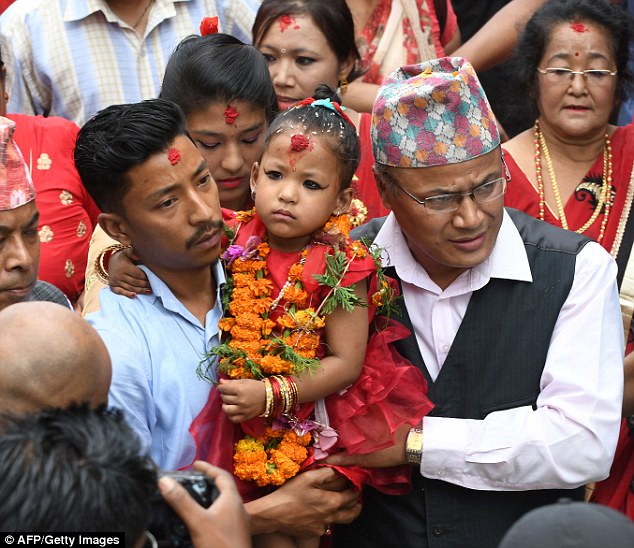
Kumari Goddess, the human symbol of power and protection is the sole embodiment of pureness among Hindu and Buddhist followers. A Kumari must be in her pre-pubescent and should not have lost any drop of blood from her body. After the Kumari enters her adolescence and begins her first menstruation, she is considered impure, and the search of new Kumari begins.
In some cases, the title of Kumari is lost when the reigning Kumari suffers a cut and loses blood from her body. If a Kumari loses blood from her body, she becomes like any other humans and loses the power of Gods bestowed on her.
STRICT AND ISOLATED LIFE IN KUMARI GHAR
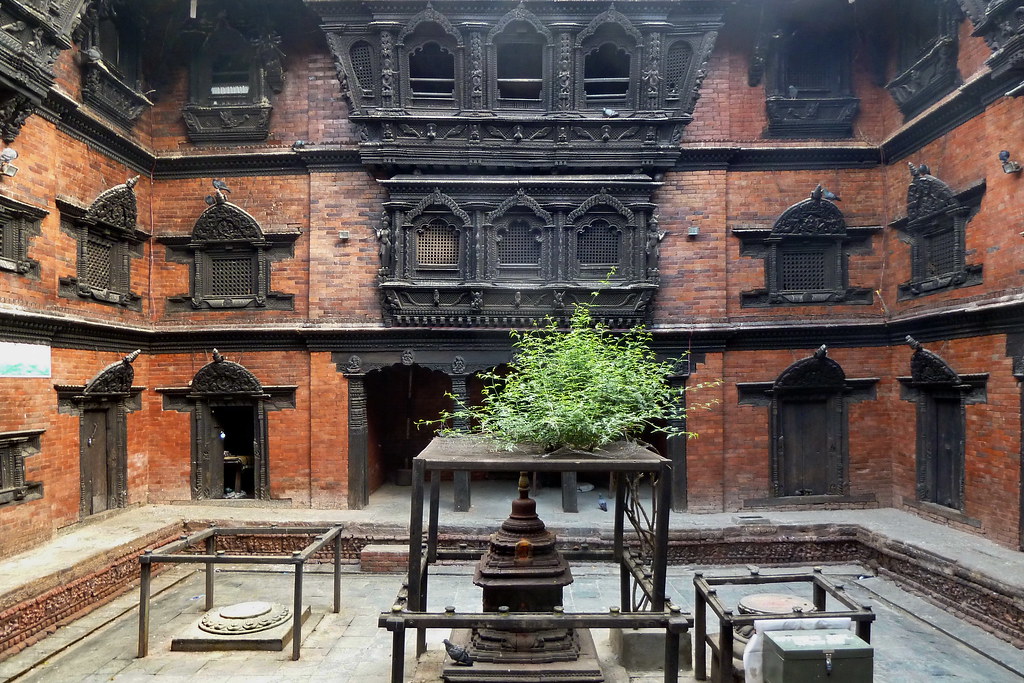
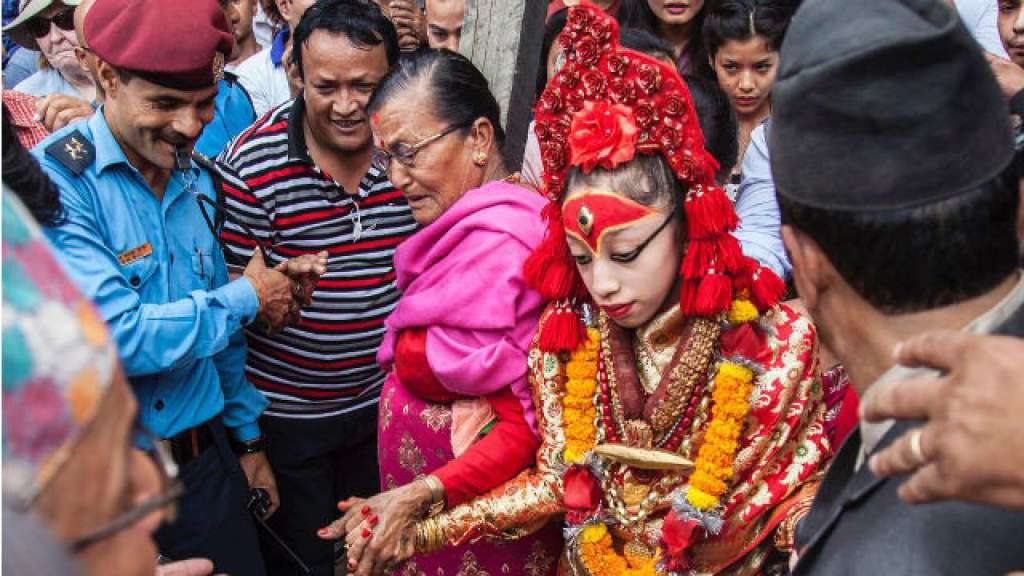
Every people dream to be among the Gods once in their life. However, it is not so easy to sustain the life of a living goddess. Kumari Goddess is selected at very young age from as small to three years. After being selected as Kumari, the children leave their parents and birth house until another living goddess replaces her.
The parents are proud of giving birth to Goddess Taleju, but also remain sad parting away with their daughter. The parents aren’t allowed to visit their daughter and only see their children when Kumari ventures in special facilities, about 13 times a year. Kumari lives in the Kumari house (Kumari Ghar).
There are many Kumari Goddesses in Nepal indigenous to several locations and communities. Patan, Bhaktapur, Kathmandu, Bungamati and other Newar communities have their own Kumaris. The Kumari of Kathmandu is considered as the Royal Kumari, the supreme of all.
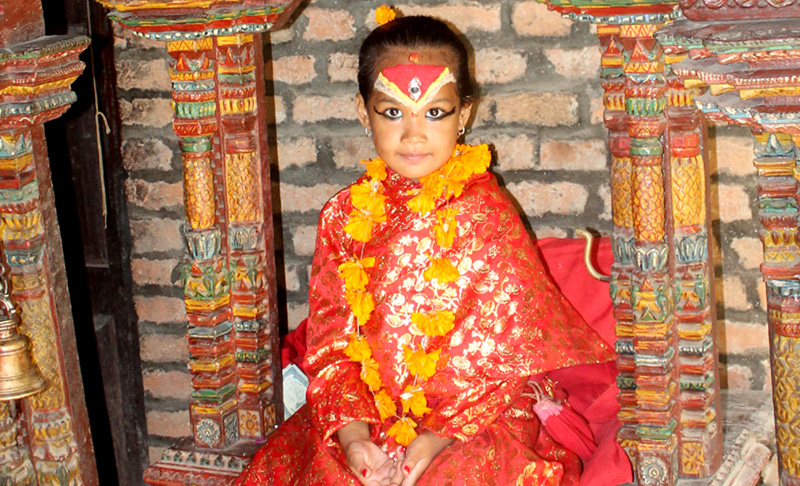
Goddess Kumari from Bhaktapur(Source: Myrepublica) 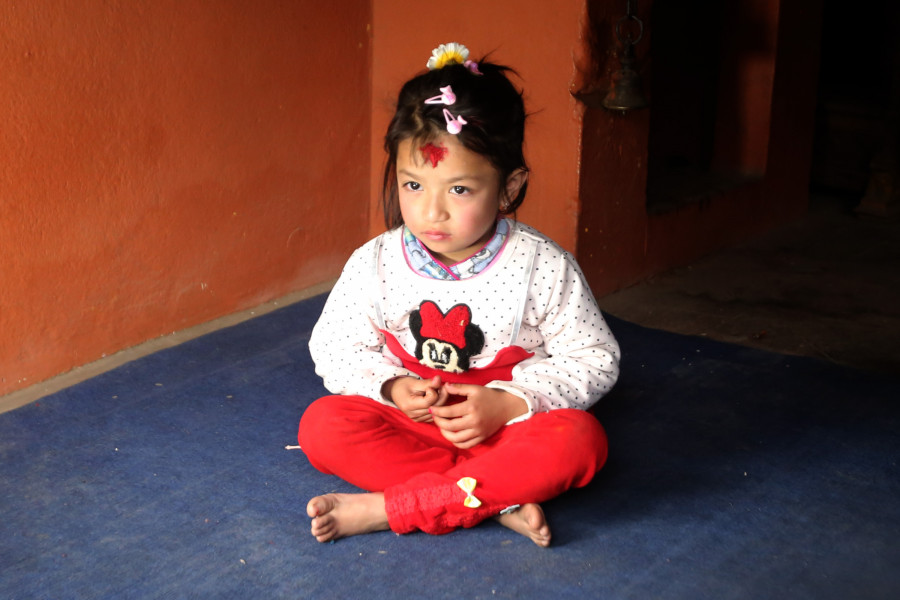
Nihira Bajracharya, Newly selected Goddess Kumari of Lalitpur(Source: The Kathmandu Post)
A recent discussion and pressure from Human rights and Children rights activists of Nepal on the Kumari system have somewhat changed the strict governing of Kumaris of Kathmandu. Kumaris weren’t given proper education and knowledge about social life and surrounding. This made the transition from a living goddess to mere mortal after dethroning much more troublesome.
Nowadays, Kumari in the Kumari house is provided with a personal tutor and education. There is even service of the Internet, books, and magazines. The Kumari attends national exams inside the palace under supervision. There is a step towards a better future of Goddess Kumari after they lose the title of living goddess.
LIFE OF GODDESS KUMARI
After being selected as a Kumari, a girl life changes entirely. She will leave her palace only for ceremonial purpose, her family will rarely visit on a formal capacity and her playmates will be from the caretaker’s family. The Kumari always wear red clothes, hair in a topknot and the fire eye painted on her forehead.
The Kumari’s walk in the Durbar Square is the last time her feet will touch the ground until the Goddess Taleju departs from her body. The Prime Minister and President touch the feet of Kumari and seek for a blessing. The Kumari is carried when visiting outside the palace in her golden palanquin.
A Kumari’s glimpse is believed to bring good fortune. Many people visit the courtyard in front of Kumari’s window to get a glance of the living goddess. The more fortunate and better-connected people visit the Kumari in her chambers. She sits upon a gilded iron throne. Many people who visit her are those suffering from illness and menstrual disorders. It is believed that Kumari has special powers over such illness. Bureaucrats and high ranked government officials also visit Kumari Goddess. During the visit, the actions of the living goddess are closely watched because her actions are interpreted as a prediction of the visitor’s life. Some actions and its meaning of Kumari Goddess are:
- Crying or Loud Laughter: Serious illness or death
- Rubbing Eyes: Imminent death
- Trembling: Imprisonment
- Picking at food offerings: Financial Losses
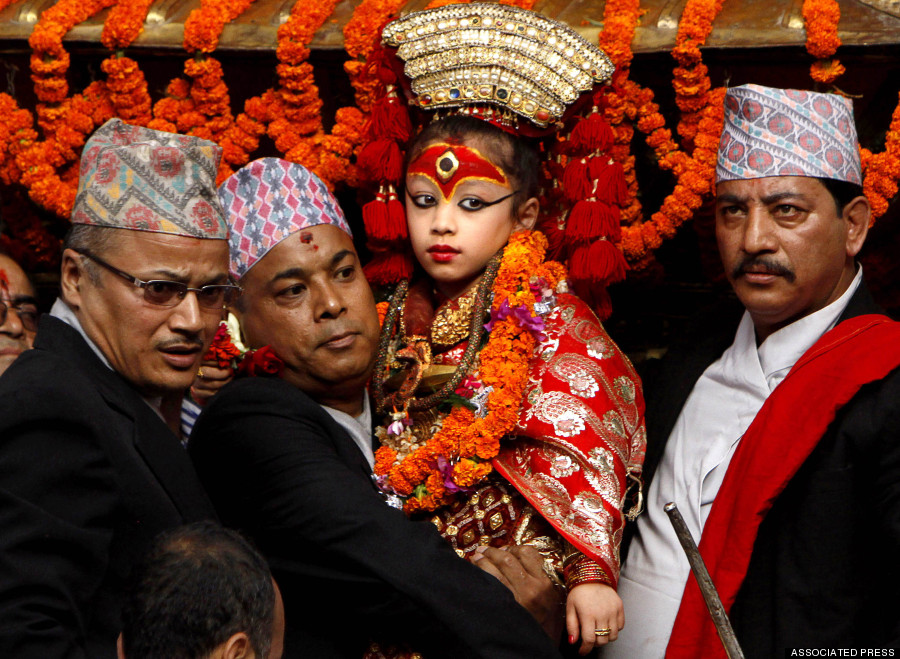
Devotees carry Nepal’s living goddess, locally known as Kumari, for a chariot procession during Indra Jatra festival, in Katmandu, Nepal, Sunday, Sept.11, 2011. Indra Jatra marking the end of the monsoon season is celebrated to worship God of rain Indra. (AP Photo/Binod Joshi) 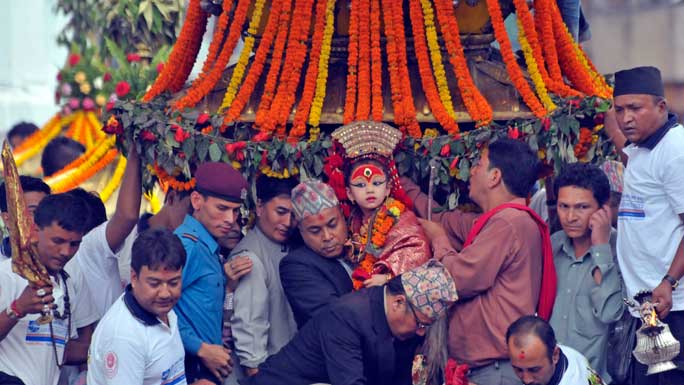
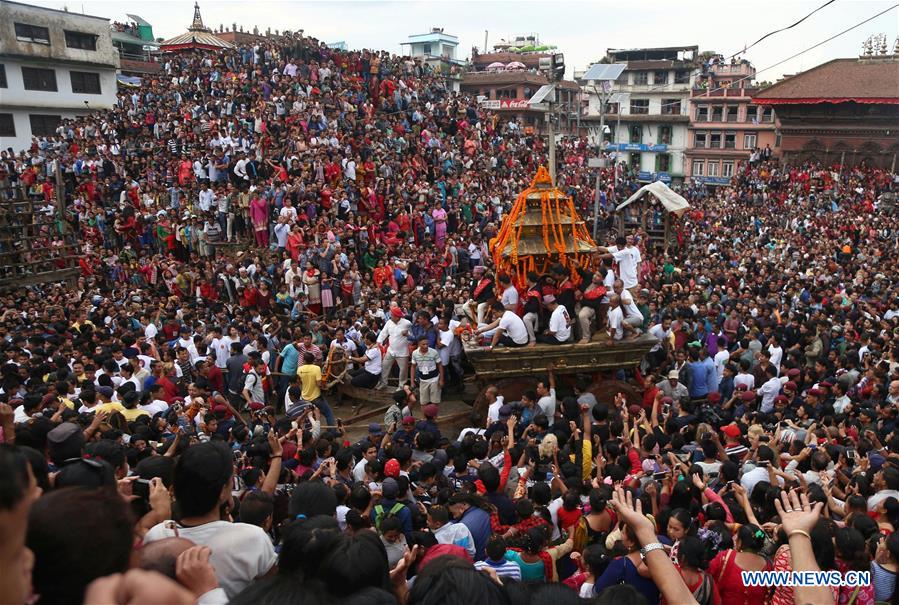
Over 100 of young girls participated in ancient Kumari Puja, Indra Jatra
 Aashish's Photography blog